

Answer a few questions and try the response on your own phone.
See automated follow-up in action.
See what happens when an enquiry gets a reply while you're busy with the job. Add your details and watch the response arrive on your phone.
It's the same system we use in our own business, built around the way you work.
- A real response from the system
- No obligation to book anything
Business systems define the steps, responsibilities and approvals that keep work moving consistently, whether or not the owner is in the room. Software is where a system runs. The system is the decision. The five areas are sales and enquiries, customer handovers, process documentation, reporting and useful AI applications. Start where the business needs the most help, which is often enquiries and quotes.

Most owners I sit down with can name every app they pay for. Then I ask what happens when an enquiry comes in on a Thursday afternoon while they're with a client, and the answer changes shape.
"Well, normally I see it when I get back to the car, and if it looks decent I'll ring them that night." That sentence is the system. It works right up until the night they're too tired to ring, because it lives in one person's head and runs only when that person remembers.
That's what I mean by a business running on memory. Memory doesn't scale.
So what are business systems, exactly?
A business system is a decision about how a piece of work gets done, written down and set up so it happens the same way every time. For each step, it sets out what happens and who is responsible.
Take a quote. Without a system, it goes out when someone gets to it and gets followed up when someone remembers. With one, the enquiry is answered quickly, the details are captured once, and the owner approves the quote before it goes. It's then followed up on day 2, day 6 and day 13, and the sequence stops the moment the customer replies.
Same business, same people, possibly the same software. Somebody made the decisions once, and now the work follows them.
Software is where a system runs
Software companies sell their product as the system, so it's easy to buy the tool and assume the problem is solved. Six months later the quote module handles about a third of quotes and follow-up still happens "when someone remembers".
You can buy software tonight. What you can't buy is the decision about what should happen at each step and who signs off. Until that exists, the software just stores the mess more neatly.
Most businesses we meet already own software that was never set up to do the job. We usually keep it, connect it, and make the decisions it was waiting for.
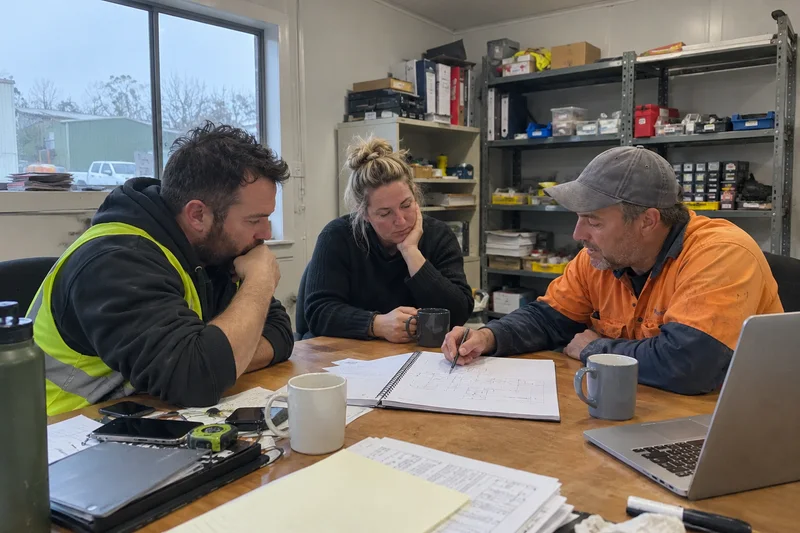
One place for every customer
The phone call, the promise to send something Friday, the offhand comment about budget. If it isn't written down where the team can see it, it's gone the moment the person who heard it gets busy.
So the foundation is one place for every customer, where every enquiry, conversation, quote and job sits with its history attached. When the answer to "where's that up to?" is a place to look rather than a person to ask, every other system has something to sit on.
The five systems a service business needs, in order
After mapping a fair few owner-led businesses, and running two of my own, I keep finding the same five places where work waits on the owner. This order suits most service businesses.
1. Sales and enquiries, because it pays for the rest
Every enquiry answered quickly, details captured once, the quote out while the customer is still warm, and follow-up that doesn't rely on anyone remembering. You approve the quote. The system does the chasing.
It goes first because it's where money is already walking out the door. Missed calls a week, times the share that would have booked, times the average job, times 52. Five missed calls a week, with one in five converting to a $500 job, could mean $26,000 a year in potential work. Run your own numbers with the missed-call cost calculator.
At our own gym, this one system turned 275 enquiries into 80 new members in our peak six months, more than $4,000 a week we hadn't been seeing. More on sales and enquiry systems.
2. Onboarding and delivery
A new client gets the same first week every time, whoever is on shift. Welcome messages, forms, bookings and reminders go out on their own, handovers happen in the system, and reviews and referrals get asked for at the right moment.
Once more work is coming in, delivering it consistently is where the next crack appears. More on onboarding and delivery systems.
3. Process documentation
The way things are done here, written down, kept current and actually used. It lets a new hire become useful in weeks rather than months, and stops the owner being the answer to every question.
It sits third because a process designed properly in steps one and two is much easier to document. Writing down the chaos only preserves it. More on process documentation.
4. Reporting and visibility
The few numbers that tell you how the week is going, on one screen, updated automatically. Enquiries, conversion, work booked, cash in.
Numbers only mean something once the work behind them is consistent. Until then you're measuring memory. More on reporting and dashboards.
5. AI in the business
AI goes last, which surprises people. It speeds up whatever it's pointed at, including the mess. Pointed at clear processes and one place for every customer, it takes real hours out of the week. Pointed at a business running on memory, it produces confident nonsense faster.
This is where I work as a fractional Chief AI Officer, two days a month inside the business, finding where AI pays and training the team to use it within Australian privacy law. More on AI in the business.
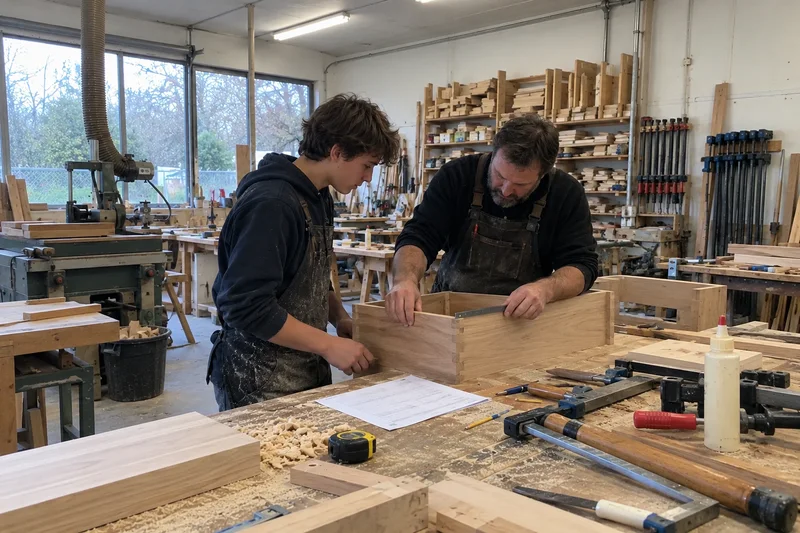
How to tell if you're running on memory
Be strict with yourself, because nobody else is reading.
- A quote goes out and nobody could tell you when it will be followed up.
- New staff ask you the same questions the last new staff asked.
- You take a week off and the phone comes with you.
- Two people on your team would onboard the same client in two different ways.
- You find out how the month went when the bank balance tells you.
- The answer to "where's that up to?" is a person's name rather than a place to look.
If more than a couple of those landed, you're normal. It works at three people. By ten it's the ceiling. The systems scorecard covers the same ground in more detail and shows which of the five systems to look at first.
Where to start
Pick the one place in the week where work most often waits on you. For most owners it's enquiries and quotes. Write down what happens now, step by step, including the bits that depend on you remembering, and mark each step with who does it and who signs off.
That page is the start of a system. It won't run itself yet, but it exists somewhere other than your head. Everything we build starts from that kind of page, written with you for the whole business.
The software can come later. It usually does.
See the system in action.
Try the enquiry follow-up system on your own phone. Add your details, answer a few questions and see the response arrive.