See it in actionTry it out

Home/How we work

How we build and run your business systems.

Map first. Quote second. You see exactly what will be built and what it will cost, in writing, before anything is built. That's only possible because we map how your business runs before anyone writes a price.

Jonathan Lambrianidis presenting a Reconnect Digital session
The person who maps it stays involved.

Jonathan leads the map, then stays accountable for the build.

Map, build, run. In that order.

The order is the whole point. Building before mapping is how a business ends up paying for software nobody uses, and building without anyone running it afterwards is how a good system drifts back into somebody's memory.

Jonathan Lambrianidis presenting a Reconnect Digital session
Jonathan leading a Reconnect Digital session.

Map

Working sessions with Jonathan and the team, on site or remote. We follow an enquiry through the business and ask who sees it first, where the details go and who chases the quote.

  • A written picture of how the business runs today
  • Every point where it depends on you, named
  • What to build first, and why
  • A written scope and a fixed price

Build

We build what the map calls for, in the order that gives back the most of your week first. Where your current tools do the job we keep them and connect them. We test the handover with your office and crew on real enquiries and jobs, so the system fits the working day.

  • Handed over in working sessions with the team, on real work
  • First system live within 30 days of kickoff, as our aim

Run

When staff or prices change, nobody updates the follow-up. A system nobody looks after slides back into memory, so we stay on to measure what we built and improve it.

  • A monthly review with you
  • The numbers that show whether it's working
  • Fixes as the business changes around it
  • The next system when you're ready, scoped and priced the same way

Sometimes the map shows you need a new hire or a price rise rather than a system. We tell you, and the written map is still yours. And if the plan is more ads before fixing what happens to the enquiries already coming in, we'd rather say so at the start.

How most owners get burnt on a build.

Most owners we meet have paid for a system at least once already. The story is usually the same, and it goes wrong in two places.

Week one

The price came before anyone understood the business.

A demo, then a proposal with a number on it. Nobody asked who picks up the phone when you're on site, or what happens to a quote once it's sent. The build was priced against a business that doesn't quite exist.

Month three

The build doesn't fit how you actually work.

So it gets extra invoices for changes, or it gets quietly abandoned. The team goes back to doing it the old way, and you keep paying a subscription for a login nobody uses.

It's why the first thing most owners ask us is what it'll cost, and why we don't give a number until we know what the number is for.

A price is only as good as the understanding behind it.

Most owners have been burnt by paying for a build before anyone understood how their business actually runs. So we map first and quote second.

Until someone has followed an enquiry from the first call to the invoice, and asked the lead tradie where it gets stuck, any quote is a guess. The guess gets corrected later, usually on your invoice.

Everything we sell runs in our own gym first. The job the office describes is rarely the job that happens on the floor or on site, so the map starts with the people doing the work, not the org chart.

So the map ends with a written scope and a fixed price. You read exactly what we'd build, where the scope stops and what it costs before you've agreed to anything. A fixed price also puts the risk of getting the scope wrong on us, which is where it belongs.


Why there's no price list.

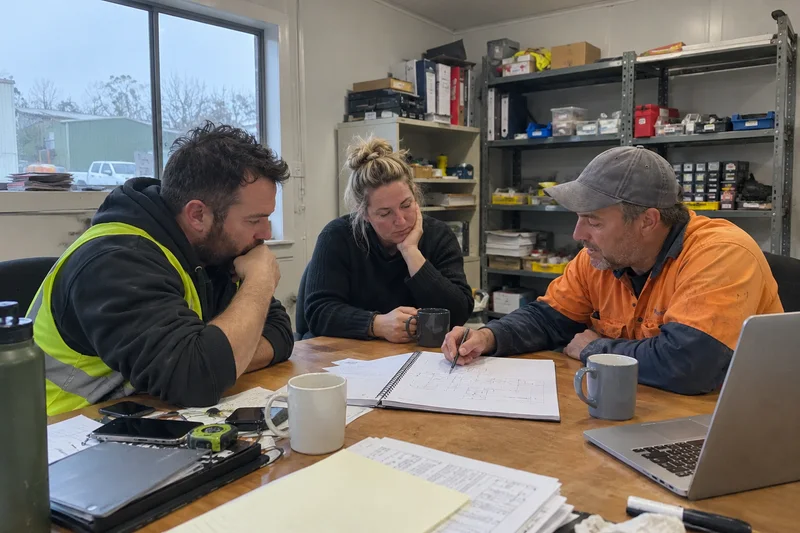
A trade business team planning the work around a workshop table

A sole trader handling callouts and a forty-person crew running projects need different things built. A price list would mean one of them paying for work it doesn't need, so the price follows the scope.

You get the full number in writing as separate lines. The build is a fixed price for the systems in the written scope, and if the scope doesn't change, the price doesn't either. Running it is a monthly figure for the review and the fixes that come out of it.

Any ad spend sits in your own ad accounts, in your business's name, and software is its own line, so you can see what each tool costs and why it's there.

Nothing is built until you've read that page and said yes.

The same order runs our own business.

We built and run the systems at Fit For Life, the gym my partner and I own, before we offered them to anyone. We then followed the same approach with other businesses.

275→ 80

enquiries turned into new members at our gym in its peak six months

6,000+

leads in a year for a restaurant and catering business, run on systems rather than longer hours

The part I didn't expect is the head space. Nobody carries the "did we ever reply to that lady from Tuesday" feeling around anymore. It just runs.
Laura Healy, Fit For Life Health & Fitness, Melbourne

Questions about how an engagement works.

How long does a business systems engagement take?

The map is usually one or two working sessions, and our aim is the first system live within 30 days of kickoff. Kickoff is the first build session, because logins and access come first, and how quickly those come back from your side moves the date most. The run stage is ongoing after that.

Will I know the cost before we start?

Yes. The map ends with a written scope and a fixed price, with the build, the monthly running, software and any ad spend as separate lines. You see all of it before anything is built.

Can we start with one system?

Yes, and most businesses do. We build one system at a time so each one is live and used before the next begins. Many start with sales and enquiries, where the owner is most often the bottleneck, but the map decides.

Do we have to change our software?

Not unless the map shows a reason to. Where your current tools are doing the job we keep them and connect them, and anything new appears on the scope as its own line.

Who actually does the work?

Jonathan runs every map himself and stays accountable for what gets built and run after it. We're based in Melbourne and work with businesses across Australia, with most of the build done remotely alongside your team.

The systems map is paid. We confirm its scope and fee before you book. Any build is scoped and priced separately. See the written map.

See the system in action.

Try the enquiry follow-up system on your own phone. Add your details, answer a few questions and see the response arrive.