See it in actionTry it out

Home/What we build/Process documentation

Process documentation for tradies: job checklists your crew can use.

Your team keeps asking you because the answers only exist in your head. We write the procedures with the people who do the work, keep each one short, give it an owner, and put it where the question actually comes up.

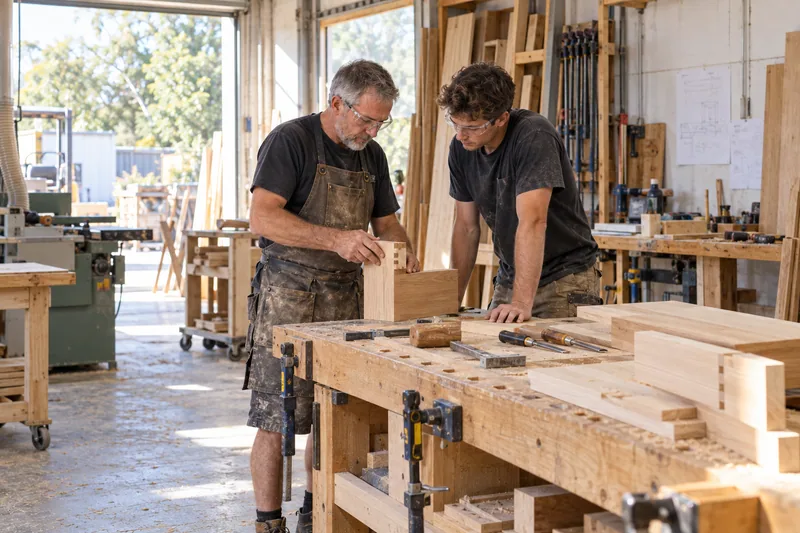
An experienced cabinetmaker showing an apprentice how to check a timber joint
Show them once. Make it repeatable.

Keep the practical knowledge available to whoever is doing the job.

  1. Find the task
  2. Follow the steps
  3. Know who to ask

The answers are in your head. So is the backup copy.

Every business already has standard operating procedures. Most just aren't written anywhere. You can see where they live by watching who gets asked.

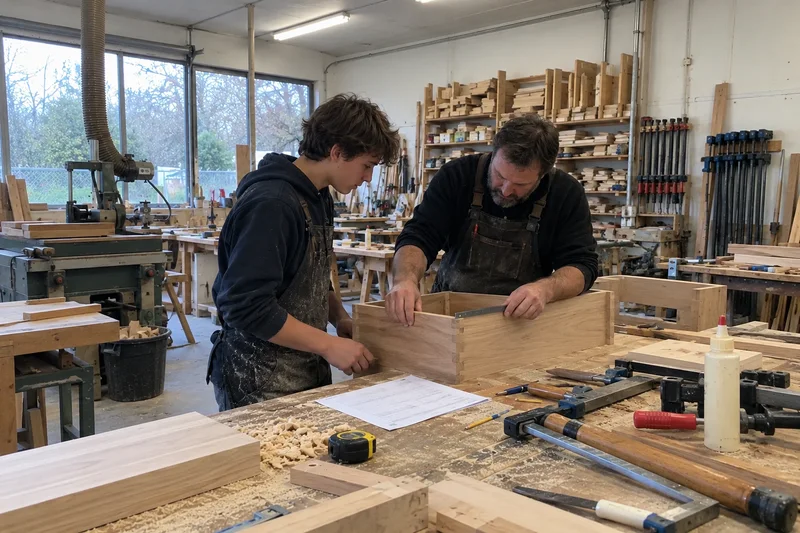
A cabinetmaker and apprentice checking an assembly against a job checklist

Every week

The same questions, from capable people.

Where do the completion photos go? Who approves a variation before we start? None of these are hard. Your team asks because there's nowhere else the answer lives.

Each one takes a minute, which is why nobody counts them. You answer a fair few a day, usually while you're meant to be doing something else.

The week someone's away

The work stops, or gets done differently.

The one long-serving person who knows how the supplier account works goes on leave. Orders go in late, or a different way, and a client notices before you do.

It's the same problem from the other side. The answer lived in one head, and the head went on holiday.

That's a business running on memory, and memory doesn't scale. Every new hire adds another person who has to ask.

One procedure your team can actually use.

Start with a short, usable page. Then test it with someone who was not there when the process was explained.

Close out a completed job

Task: Record a completed trade job and hand it to the office for invoicing.

Owner
Site supervisor
Use it when
The crew finishes the agreed work on site.
Review
Every three months and whenever the job completion process changes.
  1. Open the correct job record and confirm the site address and agreed scope.
  2. Record what was completed and flag any unfinished work or customer question.
  3. Attach the agreed completion photos and any approved variation records.
  4. Mark the job ready for office review only when the required information is complete.
  5. Assign each outstanding item to the office or supervisor, with a due time.

Stop and ask: If scope, safety or a variation is unresolved, contact the supervisor. A checklist does not replace qualified judgement or required compliance checks.

Done means: The office has the job notes and photos, and any open item has a named owner.

How we write, test and hand over a procedure
  1. Us

    We sit with the person who closes out jobs while they finish a real job record, and record it. Twenty minutes, including the two exceptions they'd never have thought to mention.

  2. Us

    AI turns the recording into numbered steps, and we check every one against what we saw. One task, one page, with a screenshot wherever the screen is confusing.

  3. Us

    We give the page a title the crew would search for, such as "close out a job".

  4. You

    You read the draft on your phone and mark anything that's wrong. A few minutes, not an afternoon.

  5. Us

    The person who closes out jobs becomes the owner of the page, with a review date six months out.

  6. Us

    The page is linked from the job card and the crew’s completion checklist, so it turns up at the moment of the question.

  7. A new team member

    The next job record is completed from the page alone while we watch. Where they hesitate, the page gets rewritten.

  8. The page owner

    The review date comes round. They confirm the page still matches what happens, or update it. Nobody has to remember.

Every procedure we write goes through the same steps, starting with the tasks that stop when one person is away. More on training your crew

The test we use in our own gym.

At Fit For Life, the gym my partner and I own, we test whether our Saturday casual can run each system without a manual or a phone call for help.

If yes, the rest of the team will be fine. If no, the process still belongs to me, however nicely it's written.

It's a harder test than it sounds. The casual might work one shift a week and wasn't there when the process was explained. A procedure that gets them through will get anyone through, including the new hire you haven't met yet.

The part I didn't expect is the head space. Nobody carries the "did we ever reply to that lady from Tuesday" feeling around anymore. It just runs.
Laura Healy, Fit For Life Health & Fitness, Melbourne

Most manuals get written once and never opened again.

Most owners I meet have tried the forty-page manual. It took a month of weekends, went into a shared drive, and nobody has opened it since.

The writing was rarely the problem. A manual is built to be read front to back, and nobody reads a manual front to back. People look something up at the moment they're stuck, standing on site with the next job waiting. If finding the page takes longer than asking you, they'll ask you.

The procedures that survive have four things in common. They're short, one task to a page. Someone owns each one. Each has a date when it gets checked. And it sits where the work happens, linked from the job card or the office checklist, so it's in front of people at the moment they'd otherwise ring you.

Miss any of those and the page drifts out of date. Once the team stops trusting it, the questions come back to you. So what we build is the keeping as much as the writing.


You're the worst person to write them.

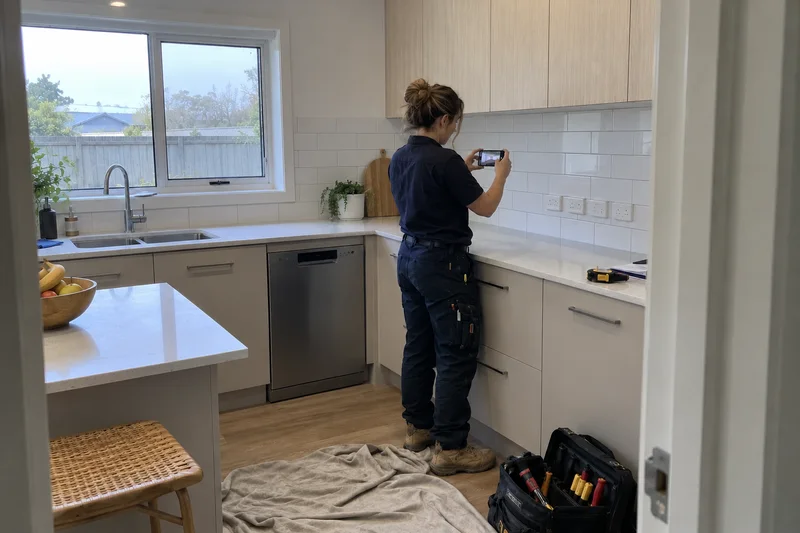
An electrician taking completion photos of a finished kitchen installation

It sounds backwards, since you know the most. That's the trouble.

You've done the task so many times the steps have gone automatic. You skip the ones that feel obvious, and the obvious ones are exactly where a new person gets stuck. Ask an owner to write up the end-of-job handover and you'll usually get five lines. Watch the person who actually does it and you'll find a dozen steps and a step with the completion photos that nobody has ever written down.

Then there's the time. Asking a flat-out owner to write the manual is how manuals don't get written. It sits on the list behind everything with a customer attached, which is everything.

So we sit with the people who do the work and ask about the exceptions, because that's where the questions come from. We write the draft. Your part is reading it and saying what's wrong. You review a draft, never a blank page.

Questions about standard operating procedures.

What is a standard operating procedure in a small business?

It's a short written description of how a recurring task is done in your business, step by step, with a named owner and a date it was last checked. The point is that anyone on the team can do the task the same way without asking the one person who normally does it.

Do I have to write the SOPs myself?

No. We sit with the people who do the work and write the drafts. AI helps turn a recorded walkthrough into first-draft steps, and we check every one against what we saw. Your part is reviewing the drafts, which for most owners is a few hours in total.

Which processes should we document first?

The ones that stop when one person is away, and the questions you get asked most. That's usually how an enquiry is answered and quoted, how an accepted quote becomes a job, how a job is closed out and invoiced, and what to do with a complaint or a refund. A systems map finds them before any writing starts.

How do you stop SOPs going out of date?

Each procedure has an owner and a review date. The owner gets a reminder to confirm or update it, and we check each month that what's written still matches what's done. Because the procedures sit inside the tools your team already opens, they get used, and a page that gets used gets noticed when it's wrong.

How is it priced?

It's scoped to your business after a systems map, with a fixed price in writing before anything is built.

A procedure needs an owner after it is written.

We observe the work, write a short first version and ask someone who did not write it to run through it. The gaps they find become the next version. Each procedure records its owner, the event that starts it, the steps, the exceptions and the date it was reviewed.

We also agree where it lives and when to review it. That might be after a tool changes, a question keeps coming up or a mistake exposes a gap in the instructions. Use our small-business SOP guide and template to see the structure before a build.

See the system in action.

Try the enquiry follow-up system on your own phone. Add your details, answer a few questions and see the response arrive.