

Home/What we build/AI Concierge
AI consulting for trade businesses, with someone accountable for making it work.
Practical AI support for trade businesses in Melbourne and across Australia. Jonathan helps your office and crew use AI for quote drafts, customer replies and finding job information, with a person checking the decisions. AI Concierge gives teams of roughly 5 to 50 two days a month dedicated to setting it up and keeping it useful.

Choose the useful applications, then help your team use them.
- Choose a task
- Set the rules
- Train the team
Answer a few questions and try the response on your own phone.
See automated follow-up in action.
See what happens when an enquiry gets a reply while you're busy with the job. Add your details and watch the response arrive on your phone.
It's the same system we use in our own business, built around the way you work.
- A real response from the system
- No obligation to book anything
Everyone in your business has been told to use AI. Nobody owns it.
Walk through most businesses with a team of fifteen and you'll find AI already in use. Just not in any way the owner could describe.
One person is quietly using it to write quotes. They're faster than everyone else and nobody knows why. Another is pasting customer details into a free app they found on their phone. The manager has banned it for anything client-facing, which mostly means people use it and don't mention it. And the business is paying for three subscriptions, each set up halfway in the week somebody read an article about it.
None of it connects to how the work actually moves through the business. So the owner decides AI is overhyped, or that the team has raced ahead and they've missed it. Both are usually wrong.
How the two days a month run.
Every visit is in the business, with the people doing the work.
The first day is spent with your team.
A day with the team, watching how work actually moves. Quote preparation, customer updates, job notes, crew scheduling and the Monday numbers. The aim is to find the few places where AI pays for itself, and the places it should stay out of.
A short inventory records each task, who does it, the time spent, the tools used and where approval is needed.
The second day produces a written plan.
We write a plan for the first three tasks AI could help with, in order, with a named person responsible for each. You sign it off before anything is set up.
An ordered plan with a named owner, success measure and information-handling rule for each proposed use.
Each month, we put the next agreed workflow in place.
A day setting things up and switching them on with the people who'll use them, on your accounts and alongside the systems you already run. The test is our gym's Saturday casual. If they could run it without a manual, your team will be fine.
One agreed workflow set up and tested, with a short instruction sheet and a named person ready to use it.
Then we review what’s working.
A day checking what stuck, what quietly got abandoned and why, then deciding what comes off the business next. Anything that isn't earning its place gets switched off, subscription included.
A written keep, change or stop decision, the reason for it and the next agreed priority.
Between visits your team can reach Jonathan directly, so a small snag doesn't turn into a workaround. How teams pick up new systems
Tested in our own businesses first.
Every tool I bring into a client's business has already run in one of mine, and a fair few didn't make the cut. The one that has done the most at Fit For Life, the gym my partner and I own, is the enquiry system. The figures below cover its peak six months.
enquiries turned into new members
a week in revenue we weren't seeing before
We're coaches, so when classes are running nobody can touch a phone, and that used to mean enquiries just sat there. Some heard back from us days later. Most booked somewhere else, and we never really knew how many we'd lost. Now every call and message gets answered within seconds, trial sessions get booked while we're still on the floor, and the follow-up keeps going until someone actually walks in.Laura Healy, Fit For Life Health & Fitness, Melbourne
AI stalls in a team for a plain reason. Nobody is accountable for it.
The tools are good enough for most of what a trade business needs. What's missing is a name next to the job.
In a business of one, the owner is accountable by default. They try something, it works or it doesn't, and they decide. Add a team and that falls apart. Everyone has been told to use AI, which means nobody has been told to own it. Nobody decides which tool the business uses, what it's for, what goes into it, or whether it worked. So each person runs a private experiment, and the business learns nothing from any of them.
I learnt this with enquiries in our own gym, well before AI came into it. They sat while every coach was on the floor, and nobody could say how many we'd lost, because they belonged to nobody. AI in a team is the same problem in newer clothes.
So the fix is a person. Someone senior enough to make the calls and close enough to the work to see where AI actually pays. Most businesses of 5 to 50 need that person two days a month rather than five days a week. That's what a fractional Chief AI Officer is, and it's the job the AI Concierge does.
The rules go in before the tools do.
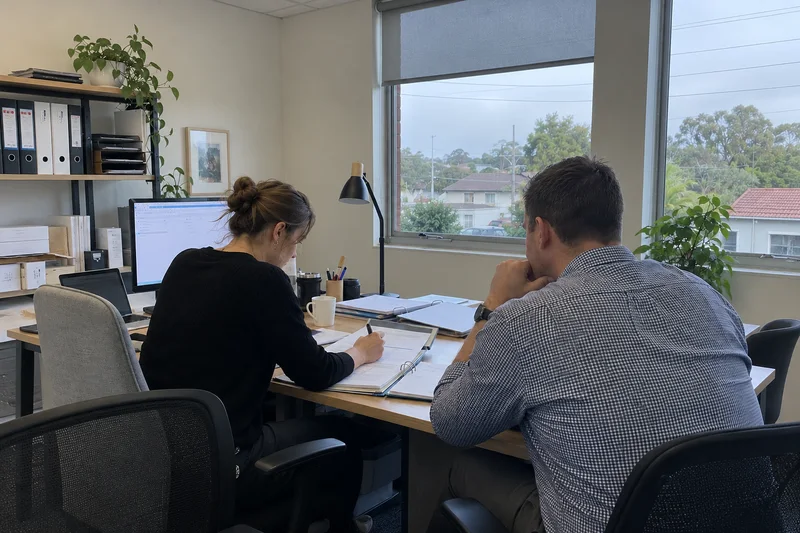
A large part of owning AI in a team is deciding what it's allowed to touch.
The usual risk is a well-meaning person saving ten minutes on an email by pasting a client's details into a public tool. They aren't being careless. Nobody told them where the line was.
Customer addresses, access codes, site photos and commercial details need agreed handling rules. We work with you to decide which information belongs in each tool. Your own adviser confirms the privacy and contractual obligations that apply to your business.
Before anything is switched on, the team gets one page explaining the approved tools, what information belongs in each and who checks the work before a customer sees it. Every tool after that is set up to fit the page, on your accounts.
Questions about a fractional Chief AI Officer.
What is a fractional Chief AI Officer?
A senior person who owns AI inside a business for a set number of days a month instead of on a full-time salary. They decide where AI fits, set the tools up with the team, write the rules for safe use and answer for whether it worked. The AI Concierge is that role, filled by Jonathan, two days a month.
Is it right for a business our size?
It’s built for teams of roughly 5 to 50 that need someone to own the work without hiring a full-time AI lead. If it's just you, or if enquiries going cold is the main problem, start with the sales system instead.
What about privacy and customer data?
It's a large part of the job. Before any tool goes live, the team has written rules for what information goes into which tool, what never does, who reviews AI output before a customer sees it, and what customers are told. The rules are practical, not legal advice. On what applies to your business specifically, your own adviser has the last word.
Do you set things up, or just advise?
Set things up. Advice without setup is how businesses end up with a drawer of half-configured subscriptions. Tools are set up with your team, on your accounts. Where something bigger is needed, like an AI receptionist, the Concierge decides the order and can run that build inside the engagement.
How much does a fractional Chief AI Officer cost in Australia?
Ours is scoped after a systems map, with a fixed price in writing before anything starts. Most businesses this size don't need a full-time AI hire, which is the point of fractional.
Start with the work your team actually does.
For a Melbourne trade business, the first step is understanding how enquiries, quote preparation, site notes and office decisions run today. We also work with Australian teams remotely. The meeting format and time commitment are agreed in the scope.
We choose a small number of useful applications, check what information they need, and decide who approves the output. Then we implement, test and document them. The ongoing work is reviewing mistakes, changing the rules when your business changes and helping the team use what was built.
AI Concierge is our name for that continuing responsibility. You may know it as a fractional Chief AI Officer. A paid systems map establishes the scope first, with the map fee confirmed before booking.
See the system in action.
Try the enquiry follow-up system on your own phone. Add your details, answer a few questions and see the response arrive.